Mostrando entradas con la etiqueta Ilya Repin. Mostrar todas las entradas

jueves, 11 de febrero de 2016

Aleksandr Pushkin, grande romântico poeta ruso

Aleksandr Pushkin, o pai da moderna poesia russa


(1) pintura de Vasily Tropinin (1827)

Aleksandr Sergeyevich Pushkin (Александр Сергеевич Пушкин) nasceu em Moscou em 26 de maio, 1799, ele morreu em São Petersburgo em 29 de janeiro de 1837. Ele foi um poeta, dramaturgo e romancista russo, fundador da literatura russa moderna. Seu trabalho se insere no movimento romântico.

Pushkin criou um estilo de narrativa, misturando drama, romance e sátira, usando a língua russa e muito influenciado figuras literárias subseqüentes, como Dostoievski, Gogol, Tyutchev e Tolstoy.


(2) Aleksandr Pushkin (1827), interpretado por Orest Kiprenski.Galería Tretyakov, Moscovo.

Ele era descendente de uma das famílias mais antigas da aristocracia russa, cuja história remonta ao século XII. Sua avó materna e sua enfermeira, um camponês humilde, para o qual ele sentiu uma imensa devoção ao final de sua vida, incutiu nele um profundo amor por contos populares russos e poesia; feito notável porque sua família aristocrática em francês foi falado. Pushkin recebeu uma boa educação literária com base na literatura e língua francesa. ávido leitor desde a infância, surpreendeu pela sua facilidade de improvisar imitações de seus professores, Molière, Voltaire e Evariste Parny francesa, eo Shakespeare Inglês e Byron.


(3) Aleksandr Pushkin aos 14 anos, antes de recitar um poema Derzhavin no Liceu Imperial em Tsarskoye Selo. Box Ilya Repin (1911).

Entre 1811 e 1817 estudos no Liceu Imperial em Tsarskoye Selo depois -chamado "Lyceum Pushkin" em sua honra-perto de São Petersburgo, onde começou a escrever seu poema Ruslan e Lyudmila, publicado em 1820, entre muita controvérsia sobre a questão e estilo . Neste poema ele pôs de lado cânones poéticas do Neoclassicismo, foi saudado pelos leitores e gradualmente ganhou o apoio de veteranos poetas.

Em 1820 ele começou a trabalhar no Ministério dos Negócios Estrangeiros e gradualmente envolvido em movimentos de reforma social, tornando-se porta-voz dos escritores radicais para escrever poemas como Oda para a liberdade, de modo que o czar Alexandre I quase banido para a Sibéria ; mas protetores e admiradores conseguido uma sentença mais leve.


(4) O adeus de Pushkin para o mar. Box Ivan Aivazovsky e Ilya Repin (1877).

As paisagens e as pessoas do Cáucaso impressionou o poeta; por isso ele escreveu o poema romântico The Captive do Cáucaso, entre 1820 e 1821. Ele escreveu poemas Gabrielada (1821), os bandidos Brothers (1822), a fonte de Bakhchisaray (1823) e poemas ouros. Em 1823, o trabalho começou cimeira, a novela em verso Eugene Onegin. Em 1825 ele escreveu o drama histórico Boris Godunov, a contagem Nulin (1825) e Roma (1827).

Retorna a Moscou, em 1830, ele conheceu Natalia Goncharova, uma das mais belas mulheres do seu tempo. Aposentou-se à propriedade de seu pai em Boldino, Nizhny Novgorod. Ele escreveu a história da aldeia Goriújino, pequenas tragédias - Mozart e Salieri, O Cavaleiro Avarento, The Stone Guest (cover de Don Juan) e outros trabalhos. Casou-se com Natalia Goncharova, em 1831; ele se juntou ao Ministério das Relações Exteriores das Relações Exteriores com o salário especial 5000 rublos.


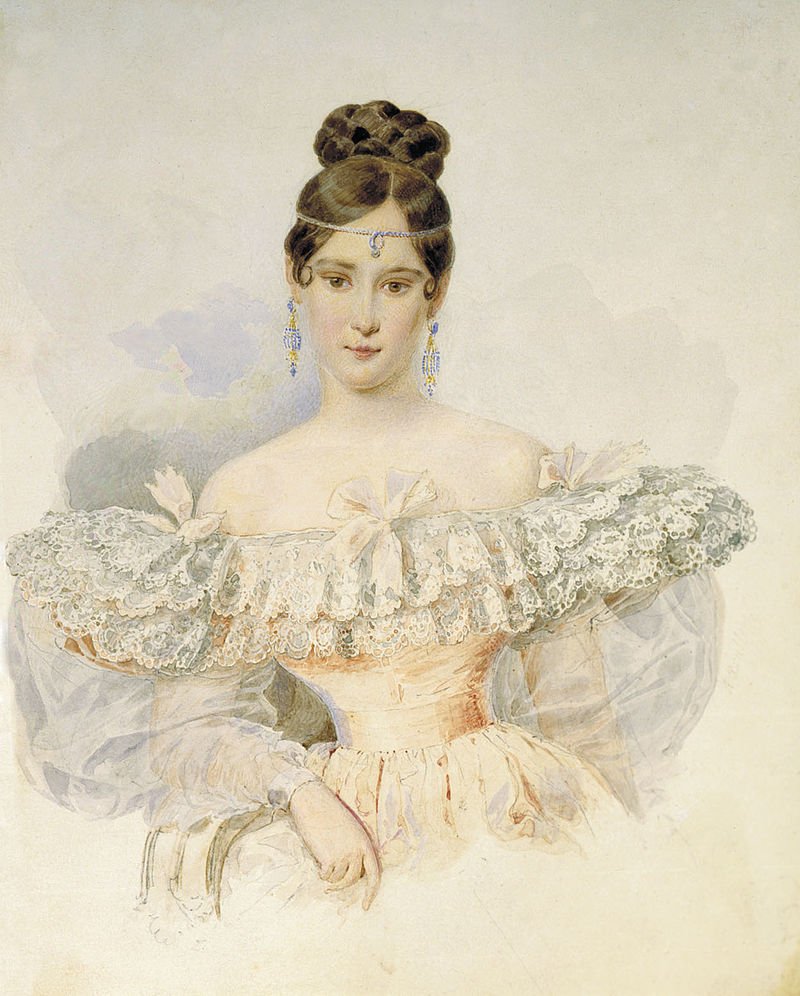
(5) Natalia Goncharova (Pushkina), retrato por Aleksandr Briullov (1822-1877).

Pushkin tinha muitas despesas (uma nova criança a cada ano, duas irmãs solteiras de sua esposa que com ele viva, o seu jogo, festas freqüentes e caros, bolas e recepções que sua esposa estava ocupado); por isso mesmo com uma obra literária incessante e o magnífico salário, acumularam dívidas enormes. Em 1836, ele publicou o jornal literário da revista Contemporary iria adquirir um prestígio máximo em letras russas.


Mas a inveja se escondia e 27 de Janeiro de 1837, aos 37 anos, Pushkin é mortalmente ferido em um duelo com o oficial francês Georges d'Anthès, amante secreto e portegido do embaixador holandês, um nos arredores de St. Petersburg . Eles trataram a arma, de modo que o poeta não podia defender-se, e a arma contrário primeira bala o atingiu no peito para iniciar o jogo, morrendo sem que os médicos pudessem fazer nada, na manhã de 29 de janeiro de 1837. uma grande perda para a literatura russa e mundial.


The Flower (1828)

The flower, very dry and scentless,
I see in the forgotten book;
And now, with the strangest fancies,
Is filled my soul’s every nook.

Where and in which spring was it grown?
And how long? By whom was cut?
By a hand known or unknown?
And why was put this page behind?

To the recall of the love-talking,
Or separation forced by fate,
Or quiet and alone walking
In the fields’ silence and woods’ shade?

Is he alive? And his sweet lady?
And where is now their little nook?
Or maybe they had both faded,

Like this strange flower in this book?

Em Yevgeny Bonver, 10 de novembro de 2003


Nos trechos de vídeo da vida de Pushkin eles são.


Referências

 Aleksandr Pushkin

Aleksandr Pushkin

Aleksandr Pushkin, The Flower, poema de 1828


Aleksandr Pushkin, grande romantico poeta ruso

Aleksandr Pushkin, il padre della moderna poesia russa


(1)                dipinto di Vasilij Tropinin (1827)

Aleksandr Sergeevic Puskin (Александр Сергеевич Пушкин) è nato a Mosca il 26 maggio 1799, è morto a San Pietroburgo il 29 gennaio 1837. Era un poeta, drammaturgo e scrittore russo, fondatore della letteratura russa moderna. La sua opera rientra nel movimento romantico.
Pushkin ha creato uno stile narrativo, mescolando dramma, romanticismo e la satira, utilizzando la lingua russa e fortemente influenzato le successive figure letterarie come Dostoevskij, Gogol, Tjutcev e Tolstoj.


(2)                Aleksandr Pushkin (1827), interpretato da Orest Kiprenski.Galería Tretyakov, Mosca.

Egli era un discendente di una delle famiglie più antiche della nobiltà russa, la cui storia risale al XII secolo. Sua nonna materna e la sua infermiera, un contadino modesto, per la quale si sentiva un immenso devozione verso la fine della sua vita, instillato in lui un profondo amore per racconti popolari russi e poesie; compiuto notevoli perché la sua famiglia aristocratica in francese è parlato. Pushkin ricevette una buona educazione letteraria basata sulla letteratura e la lingua francese. avido lettore fin dall'infanzia, stupito per la sua facilità di improvvisare imitazioni dei suoi maestri, Molière, Voltaire e Evariste Parny francese e il Shakespeare inglese e Byron.


(3) Aleksandr Pushkin all'età di 14 anni prima di recitare una poesia Derzavin nel Liceo Imperiale di Tsarskoye Selo. Box Ilya Repin (1911).

Tra il 1811 e il 1817 lo studio nel Liceo Imperiale di Tsarskoye Selo dopo -definito "Liceo Puskin" in suo onore, vicino a San Pietroburgo, dove ha iniziato a scrivere il suo poema Ruslan e Lyudmila, pubblicato nel 1820, tra molte polemiche sulla questione e lo stile . In questa poesia ha messo da parte i canoni poetici del Neoclassicismo, è stato salutato dai lettori e ha vinto gradualmente il supporto di veterani poeti.

Nel 1820 ha iniziato a lavorare presso il Ministero degli Affari Esteri e gradualmente coinvolti in movimenti di riforma sociale, diventando portavoce per gli scrittori radicali per scrivere poesie come Oda alla libertà, così lo zar Alessandro I quasi lo bandì in Siberia ; ma protettori ed estimatori raggiunto una pena più lieve.


(4) Addio di Puskin fino al mare. Box Ivan Aivazovsky e Ilya Repin (1877).

I paesaggi e la gente del Caucaso hanno colpito il poeta; così ha scritto la poesia romantica The Captive del Caucaso, tra il 1820 e il 1821. Ha scritto poesie Gabrielada (1821), i banditi Brothers (1822), la fonte di Bakhchisaray (1823) e poesie ori. Nel 1823 sono iniziati i lavori vertice, il romanzo versi Eugene Onegin. Nel 1825 ha scritto il dramma storico Boris Godunov, Il Conte Nulin (1825) e Roma (1827).

Tornando a Mosca nel 1830 ha incontrato Natalia Goncharova, una delle più belle donne del suo tempo. Si ritirò a tenuta di suo padre a Boldino, Nizhny Novgorod. Ha scritto la storia del paese Goriújino, piccole tragedie - Mozart e Salieri, Il cavaliere avaro, The Stone Guest (copertina di Don Juan) e altre opere. Ha sposato Natalia Goncharova nel 1831; ha aderito il Ministero degli Esteri degli affari esteri, stipendio speciale 5000 rubli.


(5) Natalia Goncharova (Pushkina), ritratto di Aleksandr Briullov (1822-1877).

Puskin aveva molte spese (un nuovo bambino ogni anno, due sorelle nubili della moglie che vive con lui, il suo gioco d'azzardo, feste frequenti e costosi, balli e ricevimenti che sua moglie era occupato); quindi anche con un'opera letteraria incessante e il magnifico stipendio, accumulato enormi debiti. Nel 1836 ha pubblicato sulla rivista letteraria La rivista contemporanea avrebbe acquisito un prestigio massimo lettere russe.


Ma l'invidia nascondeva e 27 gennaio 1837, all'età di 37 anni, Pushkin è ferito a morte in un duello con l'ufficiale francese Georges d'Anthès, protetto e amante segreto dell'ambasciatore olandese, alla periferia di San Pietroburgo . Hanno gestito la pistola, in modo che il poeta non poteva difendersi, e il primo proiettile pistola contrario lo ha colpito al petto per iniziare la partita, morendo senza che i medici non può fare nulla, la mattina del 29 Gennaio 1837. una grande perdita per la letteratura russa e mondiale.


Il fiore (1828)

The Flower (1828)

The flower, very dry and scentless,
I see in the forgotten book;
And now, with the strangest fancies,
Is filled my soul’s every nook.

Where and in which spring was it grown?
And how long? By whom was cut?
By a hand known or unknown?
And why was put this page behind?

To the recall of the love-talking,
Or separation forced by fate,
Or quiet and alone walking
In the fields’ silence and woods’ shade?

Is he alive? And his sweet lady?
And where is now their little nook?
Or maybe they had both faded,

Like this strange flower in this book? 

In Yevgeny Bonver, 10 novembre 2003


Negli estratti di video della vita di Puskin che sono.


Riferimenti

Aleksandr Pushkin

Aleksandr Pushkin

Aleksandr Pushkin, The Flower, poema de 1828

Aleksandr Pouchkine, grand poète romantique russe

Alexandre Pouchkine, le père de la poésie russe moderne


(1) Peinture par Vasily Tropinin (1827)

Aleksandr Sergueïevitch Pouchkine (Александр Сергеевич Пушкин) est né à Moscou le 26 mai 1799, il est mort à Saint-Pétersbourg le 29 Janvier 1837. Il était un poète, dramaturge et romancier russe, fondateur de la littérature russe moderne. Son travail se situe dans le mouvement romantique.

Pouchkine a créé un style narratif, mêlant drame, romance et de la satire, en utilisant la langue russe et grandement influencé par figures littéraires ultérieures telles que Dostoïevski, Gogol, Tolstoï et Tiouttchev.


(2) Alexandre Pouchkine (1827), interprété par Orest Kiprenski.Galería Tretiakov, Moscou.

Il était un descendant de l'une des plus anciennes familles de l'aristocratie russe, dont l'histoire remonte au XIIe siècle. Sa grand-mère maternelle et sa nourrice, un paysan humble, pour lequel il éprouvait un immense dévouement à la fin de sa vie, lui ont inculqué un amour profond pour les contes populaires russes et de la poésie; fait remarquable, car sa famille aristocratique français est parlé. Pouchkine reçut une bonne éducation littéraire sur la base de la littérature et de la langue française. lecteur avide depuis l'enfance, étonné par sa facilité à improviser des imitations de ses professeurs, Molière, Voltaire et Evariste Parny français et l'anglais et Shakespeare Byron.


(3) Alexandre Pouchkine à 14 ans avant de réciter un poème Derzhavin au
Lycée impérial de Tsarskoïe Selo. Box Ilya Repin (1911).

Entre 1811 et 1817 l'étude au Lycée impérial de Tsarskoïe Selo tard -appelé "Lyceum Pouchkine" en son honneur-près de Saint-Pétersbourg, où il a commencé à écrire son poème Ruslan and Lyudmila, publié en 1820 chez beaucoup de controverses sur la question et le style . Dans ce poème, il a mis de côté canons poétiques du néoclassicisme, a été saluée par les lecteurs et peu à peu gagné le soutien des Anciens poètes.

En 1820, il a commencé à travailler au ministère des Affaires étrangères et progressivement impliqué dans les mouvements de réforme sociale, devenant porte-parole des écrivains radicaux à écrire des poèmes comme Oda à la liberté, de sorte que le tsar Alexandre Ier lui a presque banni en Sibérie ; mais protecteurs et admirateurs ont obtenu une peine plus légère.


(4) Adieu de Pouchkine à la mer. Box Ivan Aivazovsky et Ilya Repin (1877).


Les paysages et les gens du Caucase ont impressionné le poète; donc il a écrit le poème romantique La Captive du Caucase, entre 1820 et 1821. Il a écrit des poèmes Gabrielada (1821), les bandits Brothers (1822), la source de Bakhchisaray (1823) et des poèmes médailles d'or. En 1823, les travaux ont commencé sommet, le roman en vers Eugène Onéguine. En 1825, il écrit le drame historique Boris Godounov, Le comte Nulin (1825) et de Rome (1827).

De retour à Moscou en 1830, il a rencontré Natalia Goncharova, l'une des plus belles femmes de son temps. Il a pris sa retraite à la succession de son père à Boldino, Nizhny Novgorod. Il a écrit l'histoire du village Goriújino, petites tragédies - Mozart et Salieri, Le Chevalier avare, The Stone Guest (couverture de Don Juan) et d'autres œuvres. Il a épousé Natalia Goncharova en 1831; il a rejoint le ministère des Affaires étrangères des Affaires étrangères à traitement spécial 5000 roubles.


(5) Natalia Goncharova (Pushkina), portrait par Aleksandr Briullov (1822-1877).

Pouchkine avait beaucoup de dépenses (un nouvel enfant chaque année, deux sœurs célibataires de son épouse vivant avec lui, son jeu, les parties fréquents et coûteux, bals et réceptions que sa femme était occupé); de sorte que même avec une œuvre littéraire incessante et le magnifique salaire, accumulé des dettes énormes. En 1836, il publie la revue littéraire Le magazine contemporain acquerrait un prestige maximale en lettres russes.


Mais l'envie se cachait et 27 Janvier 1837, à 37 ans, Pouchkine est mortellement blessé dans un duel avec l'officier français Georges d'Anthès, protégé et amant secret de l'ambassadeur néerlandais, l'un à la périphérie de Saint-Pétersbourg . Ils ont traité le pistolet, de sorte que le poète ne pouvait pas se défendre, et la première puce pistolet contraire l'ont frappé la poitrine pour commencer le match, mourir sans les médecins ne peut pas, dans la matinée du 29 Janvier, 1837. une grande perte pour la littérature russe et mondiale.


La Fleur (1828)

The Flower (1828)

The flower, very dry and scentless,
I see in the forgotten book;
And now, with the strangest fancies,
Is filled my soul’s every nook.

Where and in which spring was it grown?
And how long? By whom was cut?
By a hand known or unknown?
And why was put this page behind?

To the recall of the love-talking,
Or separation forced by fate,
Or quiet and alone walking
In the fields’ silence and woods’ shade?

Is he alive? And his sweet lady?
And where is now their little nook?
Or maybe they had both faded,

Like this strange flower in this book?

Dans Yevgeny Bonver 10 Novembre 2003


Dans les extraits vidéo de la vie de Pouchkine ils sont.


Références

 Aleksandr Pushkin

Aleksandr Pushkin

Aleksandr Pushkin, The Flower, poema de 1828


Aleksandr Pushkin, great romantic Russian poet


 Aleksandr Pushkin, the father of modern Russian poetry


(1) painting by Vasily Tropinin (1827)

Aleksandr Sergeyevich Pushkin (Александр Сергеевич Пушкин) was born in Moscow on May 26, 1799, he died in St. Petersburg on 29 January 1837. He was a poet, playwright and Russian novelist, founder of modern Russian literature. His work falls within the Romantic movement.

Pushkin created a narrative style, mixing drama, romance and satire, using the Russian language and greatly influenced subsequent literary figures such as Dostoyevsky, Gogol, Tyutchev and Tolstoy.


(2) Aleksandr Pushkin (1827), portrayed by Orest Kiprenski.Galería Tretyakov, Moscow.

He was a descendant of one of the oldest families in the Russian aristocracy, whose history dates back to the twelfth century. His maternal grandmother and his nurse, a peasant humble, for which he felt an immense devotion to the end of his life, instilled in him a deep love for Russian folk tales and poetry; made remarkable because his aristocratic family in French was spoken. Pushkin received a good literary education based on literature and French language. Avid reader since childhood, astonished by its ease to improvise imitations of his teachers, Molière, Voltaire and Evariste Parny French, and the English Shakespeare and Byron.


(3) Aleksandr Pushkin at age 14 before reciting a poem Derzhavin in the Imperial Lyceum in Tsarskoye Selo. Box Ilya Repin (1911).

Between 1811 and 1817 study in the Imperial Lyceum in Tsarskoye Selo later -called "Lyceum Pushkin" in his honor-near St. Petersburg, where he began writing his poem Ruslan and Lyudmila, published in 1820 among much controversy over the issue and style . In this poem he put aside poetic canons of Neoclassicism, was hailed by readers and gradually won the support of veterans poets.

In 1820 he started working at the Ministry of Foreign Affairs and gradually involved in social reform movements, becoming spokesman for the radical writers to write poems like Oda to freedom, so the Tsar Alexander I almost banished him to Siberia ; but protectors and admirers achieved a lighter sentence.


(4) Pushkin's Farewell to the sea. Box Ivan Aivazovsky and Ilya Repin (1877).

The landscapes and people of the Caucasus impressed the poet; so he wrote the romantic poem The Captive of the Caucasus, between 1820 and 1821. He wrote poems Gabrielada (1821), The Brothers bandits (1822), The source of Bakhchisaray (1823) and poems golds. In 1823 work began summit, the verse novel Eugene Onegin. In 1825 he wrote the historical drama Boris Godunov, The Count Nulin (1825) and Roma (1827).

Returning to Moscow in 1830 he met Natalia Goncharova, one of the most beautiful women of her time. He retired to his father's estate in Boldino, Nizhny Novgorod. He wrote the history of the village Goriújino, small tragedies - Mozart and Salieri, The Miserly Knight, The Stone Guest (cover of Don Juan) and other works. He married Natalia Goncharova in 1831; it joined the Foreign Ministry of Foreign Affairs with special salary 5000 rubles.


(5) Natalia Goncharova (Pushkina), portrait by Aleksandr Briullov (1822-1877).

Pushkin had many expenses (a new child every year, two unmarried sisters of his wife living with him, his gambling, frequent and expensive parties, balls and receptions that his wife was busy); so even with an incessant literary work and the magnificent salary, accumulated huge debts. In 1836 he published the literary journal The Contemporary magazine would acquire a maximum prestige in Russian letters.


But envy lurked and January 27, 1837, at age 37, Pushkin is mortally wounded in a duel with the French officer Georges d'Anthès, protected and secret lover of the Dutch ambassador, one on the outskirts of St. Petersburg . They handled the gun, so that the poet could not defend himself, and the first bullet contrary gun hit him chest to start the match, dying without the doctors could do nothing, on the morning of January 29, 1837. A great loss for the Russian and world literature


The Flower (1828)

The flower, very dry and scentless,
I see in the forgotten book;
And now, with the strangest fancies,
Is filled my soul’s every nook.

Where and in which spring was it grown?
And how long? By whom was cut?
By a hand known or unknown?
And why was put this page behind?

To the recall of the love-talking,
Or separation forced by fate,
Or quiet and alone walking
In the fields’ silence and woods’ shade?

Is he alive? And his sweet lady?
And where is now their little nook?
Or maybe they had both faded,
Like this strange flower in this book? 

Translated by Yevgeny Bonver, November 10, 2003


In the video there are  excerpts from Pushkin's life.


 References

Aleksandr Pushkin

Aleksandr Pushkin

Aleksandr Pushkin, The Flower, poema de 1828